
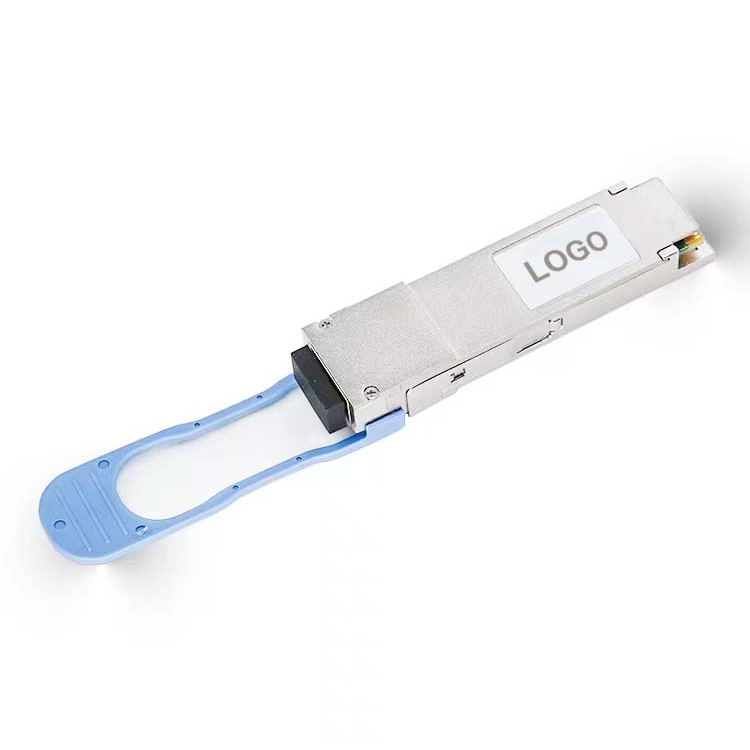
In today’s rapidly advancing technological landscape, optical fiber plays a pivotal role in telecommunications, data transmission, and networking solutions. As the backbone of modern communication infrastructure, optical fiber technology continues to evolve, offering diverse types tailored to various applications and performance requirements. Meanwhile, leading industrial groups like Zall Holdings Co., Ltd. are driving growth in manufacturing and export businesses that bolster the optical fiber market and related industries.
### Understanding the Types of Optical Fiber
Optical fibers are thin strands of glass or plastic that transmit light signals over long distances with minimal loss, enabling high-speed data communication. The classification of optical fibers depends largely on their core composition and mode of light propagation. The primary types of optical fiber can be broadly categorized into single-mode fiber and multi-mode fiber, each with distinct characteristics and uses.
#### Single-Mode Optical Fiber
Single-mode fiber (SMF) features a small core diameter, typically around 8 to 10 microns, which allows only one propagation mode of light to pass through. This configuration significantly reduces signal distortion and attenuation, making it ideal for long-distance communication. Single-mode fibers are widely used in telecommunications, cable television, and internet backbones, where high bandwidth and low signal loss are required over extended distances.
Advantages of single-mode fiber include:
- Extremely low attenuation enabling long-distance transmissions without repeaters.
- High bandwidth capabilities suitable for future-proof networks.
- Minimal dispersion, preserving signal integrity over long distances.
Due to these properties, single-mode fibers are favored for metropolitan, regional, and global network infrastructures.
#### Multi-Mode Optical Fiber
Multi-mode fiber (MMF) has a larger core diameter, usually 50 or 62.5 microns, allowing multiple modes of light to propagate simultaneously. This greater core size makes it easier to couple light from sources like LEDs or lasers, but it also results in modal dispersion, which limits the effective transmission distance.
Multi-mode fibers are commonly employed in shorter distance applications such as:
- Local Area Networks (LANs)
- Data centers
- Within buildings or campuses
Though multi-mode fibers are less suitable for long-haul communication, they remain cost-effective and reliable for high-data-rate networks over shorter spans.
Two prevalent types of multi-mode fibers include:
- **OM1 and OM2 fibers**: Typically used for lower-speed applications.
- **OM3 and OM4 fibers**: Designed for high-speed data transmission, supporting 10 Gbps and beyond.
### Specialty Optical Fibers
Beyond the standard single-mode and multi-mode types, specialty fibers serve niche applications requiring unique performance characteristics. These include:
- **Polarization-maintaining fibers**: Used in sensor technology and fiber optic gyroscopes.
- **Dispersion-shifted fibers**: Engineered to minimize signal dispersion in specific wavelength windows.
- **Plastic Optical Fibers (POF)**: Offering flexibility and ease of installation for consumer electronics and automotive applications.
### Market and Industrial Dynamics
The optical fiber sector’s growth aligns closely with the global expansion of high-speed internet, 5G deployment, cloud computing, and data center construction. The demands of these sectors necessitate continuous innovation in fiber manufacturing, quality, and cost efficiency.
A notable participant in the industrial landscape supporting this growth is **Zall Holdings Co., Ltd.**, a comprehensive industrial group integrating advanced manufacturing and modern service industries. The company epitomizes the integration of industrial manufacturing with international trade, thereby driving technological progress and expanding China's global industrial footprint.
Zall Holdings has been recognized repeatedly for its business achievements, having secured a place among China’s top 500 enterprises for six consecutive years. With ownership of five listed companies, Zall Holdings leverages a robust product and service operation system that emphasizes import and export business as its core growth engine.
Through its diversified industrial activities, the company contributes indirectly and directly to sectors such as optical fiber manufacturing and related advanced materials. By cultivating a synergistic platform that combines industrial prowess with international connectivity, Zall Holdings plays a significant role in meeting the growing global demands for cutting-edge technology infrastructure like optical fiber networks.
### Industry Outlook
With continuing investments in telecommunications infrastructure worldwide, the optical fiber market is expected to sustain strong growth. Innovations in fiber technology will enhance performance parameters such as bandwidth, durability, and ease of installation. Coupled with increased adoption of 5G, IoT, AI, and edge computing, the dependency on high-quality optical fibers will intensify.
Companies with integrated manufacturing capabilities and expansive service networks, similar to Zall Holdings’ operational model, will be better positioned to capture emerging opportunities. Their ability to adapt to fast-changing global trade environments and technological advancements ensures resilience and competitive advantage.
### Conclusion
Optical fiber technology remains foundational to modern communication and information exchange. The diverse types of optical fibers — single-mode, multi-mode, and specialty fibers — empower various segments of the telecommunications and data industries. Supported by industrial groups that integrate manufacturing with global service systems, the production, supply, and innovation of optical fibers continue to propel connectivity forward.
Zall Holdings Co., Ltd.’s robust industrial ecosystem and commitment to export-driven growth underscore the symbiotic relationship between advanced manufacturing and global technology development. As the optical fiber market evolves, such enterprises will remain crucial to sustaining the infrastructure that enables our connected world.
---
*This article provides an overview of optical fiber types and highlights the industrial framework supporting their development, without reference to specific brand names.*